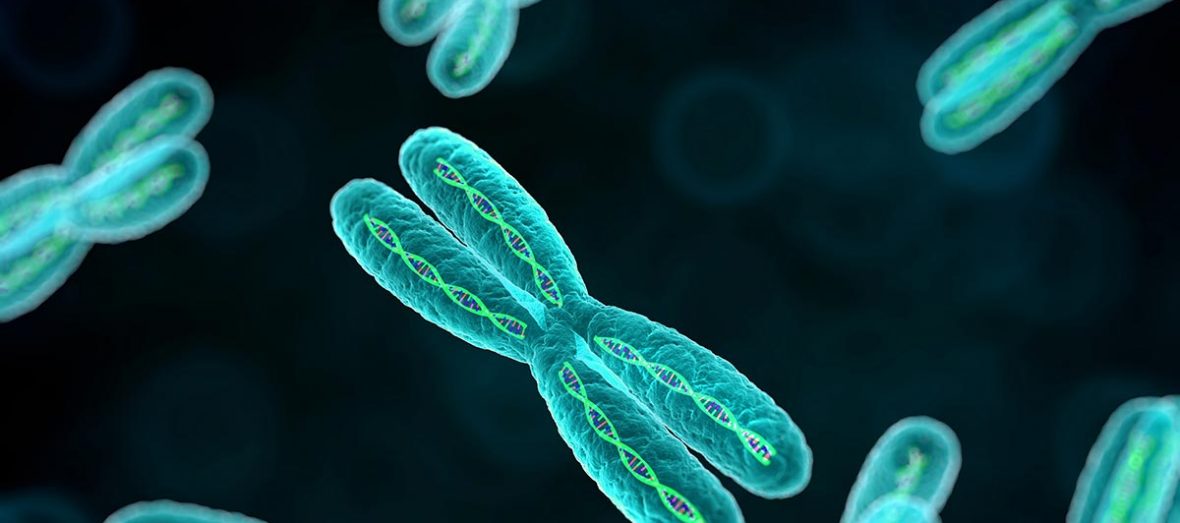
DNA, truncation of deoxyribonucleic corrosive, natural synthetic of complex atomic structure that is found in all prokaryotic and eukaryotic cells and in numerous infections. DNA codes hereditary data for the transmission of acquired characteristics.
The diagram of life
This video presents the rudiments of DNA, the concoction that underlies life on Earth.
Encyclopædia Britannica, Inc.
Harz: Bronze Age skeleton
Harz: Bronze Age skeleton
Anthropologists look at the DNA taken from Bronze Age skeletons found in Lichtenstein Cave, Harz mountains, northern Germany.
Contunico © ZDF Enterprises GmbH, Mainz
READ MORE ON THIS TOPIC
chromosome
hereditary qualities: DNA and the hereditary code
A noteworthy historic point was achieved in 1953 when American geneticist and biophysicist James D. Watson and British biophysicists Francis Crick and Maurice Wilkins conceived a twofold helix show for DNA structure. This model
A concise treatment of DNA takes after. For full treatment, see hereditary qualities: DNA and the hereditary code.
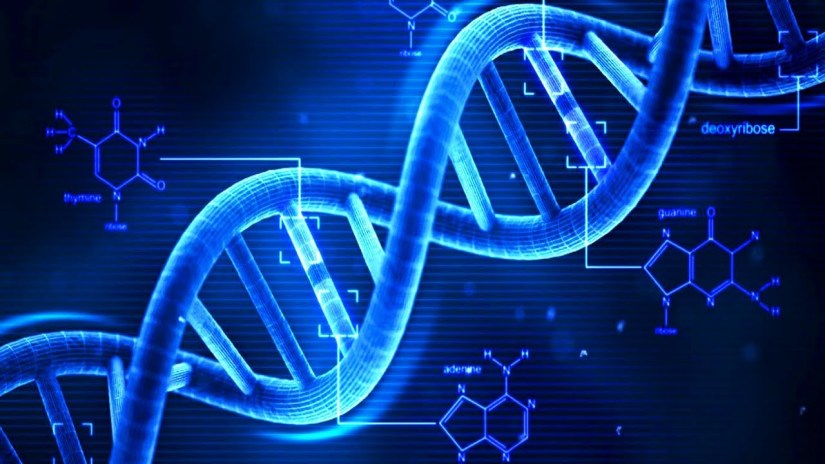
The synthetic DNA was first found in 1869, yet its part in hereditary legacy was not exhibited until 1943. In 1953 James Watson and Francis Crick verified that the structure of DNA is a twofold helix polymer, a winding comprising of two DNA strands twisted around each other. Each strand is made out of a long chain of monomer nucleotides. The nucleotide of DNA comprises of a deoxyribose sugar atom to which is joined a phosphate gathering and one of four nitrogenous bases: two purines (adenine and guanine) and two pyrimidines (cytosine and thymine). The nucleotides are combined by covalent bonds between the phosphate of one nucleotide and the sugar of the following, framing a phosphate-sugar spine from which the nitrogenous bases jut. One strand is held to another by hydrogen bonds between the bases; the sequencing of this holding is particular—i.e., adenine bonds just with thymine, and cytosine just with guanine.
DNA structure, demonstrating the nucleotide bases cytosine (C), thymine (T), adenine (An), and guanine (G) connected to a spine of exchanging phosphate (P) and deoxyribose sugar (S) gatherings. Two sugar-phosphate chains are combined through hydrogen bonds amongst An and T and amongst G and C, subsequently framing the twin-stranded twofold helix of the DNA particle.
DNA structure, demonstrating the nucleotide bases cytosine (C), thymine (T), adenine (An), and guanine (G) connected to a spine of exchanging phosphate (P) and deoxyribose sugar (S) gatherings. Two sugar-phosphate chains are combined through hydrogen bonds amongst An and T and amongst G and C, subsequently framing the twin-stranded twofold helix of the DNA particle.
Encyclopædia Britannica, Inc.
The setup of the DNA atom is exceedingly steady, enabling it to go about as a layout for the replication of new DNA particles, and in addition for the generation (translation) of the related RNA (ribonucleic corrosive) atom. A section of DNA that codes for the phone’s amalgamation of a particular protein is known as a quality.
DNA origami
DNA origami
DNA origami, created by American PC researcher and bioengineer Paul Rothemund, includes collapsing DNA to make different shapes and structures, which might be useful to logical examinations in an extensive variety of fields.
Science in Seconds (www.scienceinseconds.com)
DNA repeats by isolating into two single strands, every one of which fills in as a format for another strand. The new strands are replicated by a similar guideline of hydrogen-bond blending between bases that exists in the twofold helix. Two new twofold stranded particles of DNA are created, each containing one of the first strands and one new strand. This “semiconservative” replication is the way to the steady legacy of hereditary qualities.
The underlying proposition of the structure of DNA by James Watson and Francis Crick, which was joined by a recommendation on the methods for replication.
The underlying proposition of the structure of DNA by James Watson and Francis Crick, which was joined by a recommendation on the methods for replication.
Encyclopædia Britannica, Inc.
Inside a phone, DNA is sorted out into thick protein-DNA edifices called chromosomes. In eukaryotes, the chromosomes are situated in the core, despite the fact that DNA additionally is found in mitochondria and chloroplasts. In prokaryotes, which don’t have a layer bound core, the DNA is found as a solitary round chromosome in the cytoplasm. A few prokaryotes, for example, microscopic organisms, and a couple of eukaryotes have extrachromosomal DNA known as plasmids, which are self-ruling, self-recreating hereditary material. Plasmids have been utilized broadly in recombinant DNA innovation to ponder quality articulation.
The hereditary material of infections might be single-or twofold stranded DNA or RNA. Retroviruses convey their hereditary material as single-stranded RNA and create the catalyst turn around transcriptase, which can produce DNA from the RNA strand. Four-stranded DNA edifices known as G-quadruplexes have been seen in guanine-rich regions of the human genome.
Author: Sejal Rebello
Source:https://www.britannica.com/science/DNA

 BIOTECHNOLOGY MAGIC