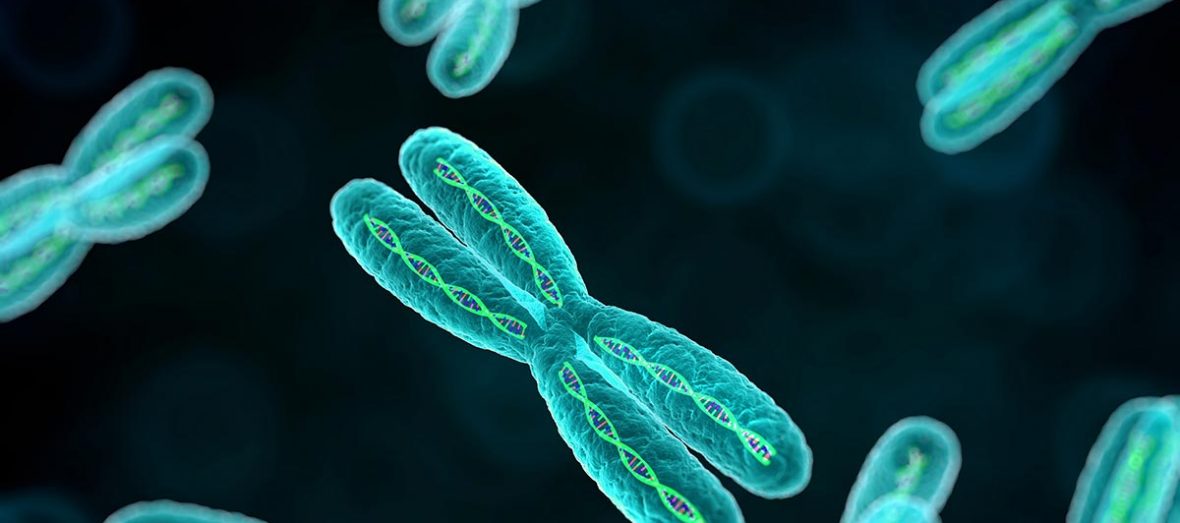
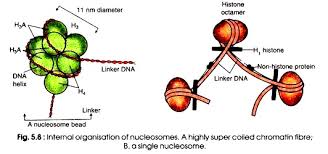
How do cells achieve every one of their capacities in such a minor, swarmed bundle? Eukaryotic cells — those that make up cattails and apple trees, mushrooms and residue parasites, halibut and perusers of Scitable — have advanced approaches to segment off various capacities to different areas in the cell. Truth be told, specific compartments called organelles exist inside eukaryotic cells for this reason. Diverse organelles assume distinctive parts in the cell — for example, mitochondria produce vitality from nourishment atoms; lysosomes separate and reuse organelles and macromolecules; and the endoplasmic reticulum helps manufacture films and transport proteins all through the cell. In any case, what attributes do all organelles have in like manner? Furthermore, for what reason was the advancement of three specific organelles — the core, the mitochondrion, and the chloroplast — so fundamental to the development of present-day eukaryotes (Figure 1, Figure 2)?
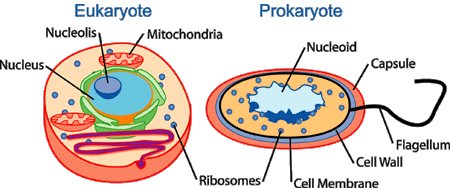
Figure 2: A chloroplast
© 2010 Nature Education All rights saved. View Terms of Use
What Defines an Organelle?
Notwithstanding the core, eukaryotic cells may contain a few different sorts of organelles, which may incorporate mitochondria, chloroplasts, the endoplasmic reticulum, the Golgi mechanical assembly, and lysosomes. Every one of these organelles plays out a particular capacity basic to the cell’s survival. In addition, almost all eukaryotic organelles are isolated from whatever remains of the cell space by a film, similarly that inside dividers isolate the rooms in a house. The layers that encompass eukaryotic organelles depend on lipid bilayers that are comparable (however not indistinguishable) to the cell’s external film. Together, the aggregate region of a cell’s inside films far surpasses that of its plasma layer.
Like the plasma layer, organelle layers capacity to keep within “in” and the outside “out.” This apportioning licenses various types of biochemical responses to occur in various organelles. Albeit every organelle plays out a particular capacity in the cell, the majority of the cell’s organelles cooperate in a coordinated manner to meet the general needs of the cell. For instance, biochemical responses in a phone’s mitochondria exchange vitality from unsaturated fats and pyruvate particles into a vitality rich atom called adenosine triphosphate (ATP). Thusly, whatever remains of the cell’s organelles utilize this ATP as the wellspring of the vitality they have to work.
Since most organelles are encompassed by layers, they are anything but difficult to envision — with amplification. For example, analysts can utilize high determination electron microscopy to take a preview through a thin cross-area or cut of a cell. Along these lines, they can see the basic detail and key qualities of various organelles —, for example, the long, thin compartments of the endoplasmic reticulum or the compacted chromatin inside the core. An electron micrograph hence gives a phenomenal plan of a cell’s internal structures. Different less ground-breaking microscopy methods combined with organelle-particular stains have helped analysts see organelle structure all the more obviously, and in addition the dissemination of different organelles inside cells. Be that as it may, not at all like the rooms in a house, a cell’s organelles are not static. Or maybe, these structures are in steady movement, some of the time moving to a specific place inside the cell, once in a while converging with different organelles, and in some cases becoming bigger or littler. These dynamic changes in cell structures can be seen with video tiny systems, which give bring down determination films of entire organelles as these structures move inside cells.
Author: Sejal Rebello
Source: https://www.nature.com/scitable
 BIOTECHNOLOGY MAGIC